
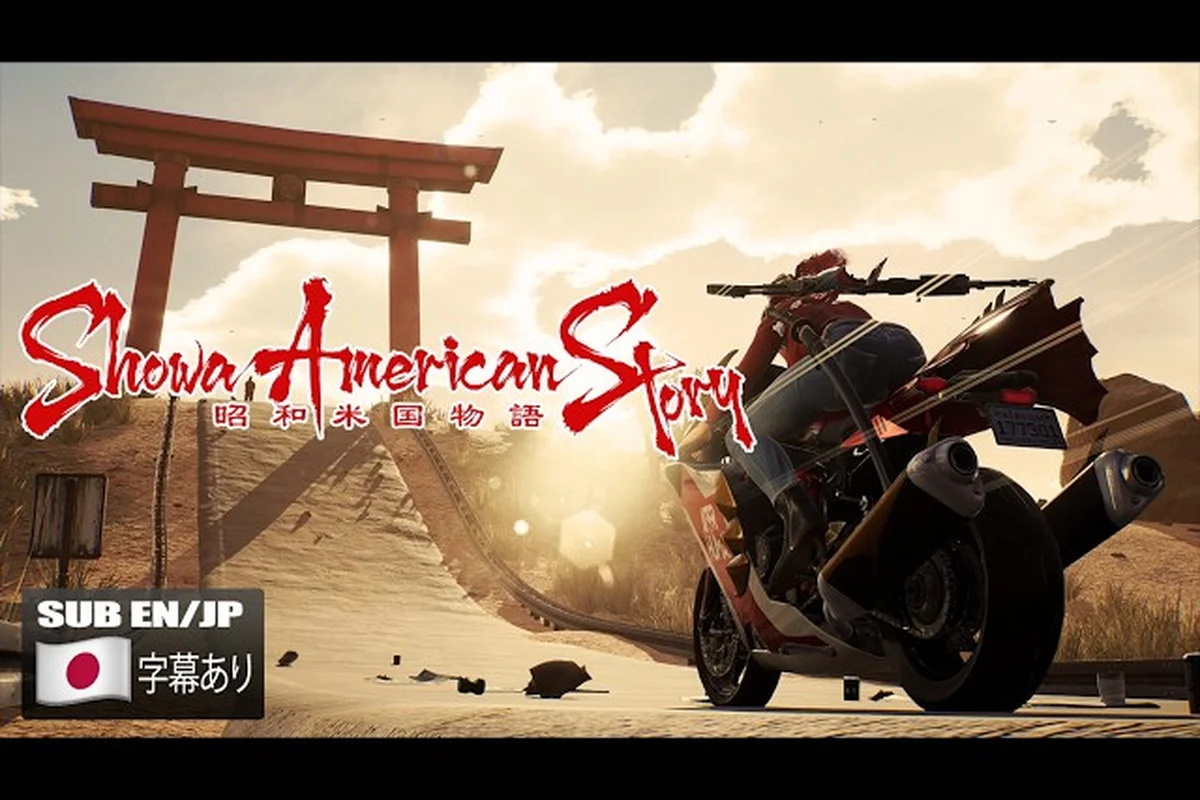
The opening moments of Showa American Story drop players into a brutal betrayal: Chigusa Choko, the stuntwoman who clawed her way back from death, is gunned down by a squad of black-clad assassins at Neo Yokohama’s airport. Who killed Choko in Showa American Story is the central mystery that drives the entire revenge narrative. Understanding who pulled the trigger — and who gave the order — unlocks the deeper conspiracy behind the post‑apocalyptic America’s power struggle. This article dissects every clue from the prologue, the enemy design, and the larger lore to name the culprits.
The Airport Ambush: A Scene-by-Scene Breakdown
The assassination is shown in the game’s opening cinematic and repeated as a flashback during Choko’s revival sequence. A group of five assassins in black tactical gear with red Showa-era motifs intercepts her at the airport terminal. They move with coordinated precision, suggesting a professional hit rather than a random zombie attack. The leader, identifiable by his crested helmet and dual-wielded katanas, delivers the fatal shot.
According to the official game description on the Showa American Story official website, Choko is a teenage girl miraculously revived from the dead. The attack happens moments after she awakens from her first death, which implies that her resurrection was anticipated — the assassins were waiting for her. This transforms the event from a random killing into a targeted elimination.
| Element | Details |
|---|---|
| Location | Neo Yokohama International Airport, Terminal C |
| Time | Immediately after Choko’s revival, mid‑afternoon |
| Assassin count | 5 operatives, 1 commander |
| Weapons used | Steel katanas (snake-engraved hilts), silenced pistols |
| Choko’s status | Unarmed, newly revived, no gear |
The environment itself holds clues: the airport PA system repeats a warning about “unauthorized resurrection” in English and Japanese, hinting that the Cultural Colonization government tracks revival events. This ties the assassination directly to the overarching Showa American Story setting — a nation fractured by Japanese colonization after a catastrophic incident.
Identifying the Black‑Clad Assassins
The Katana Stances as a Signature of a Trained Assassin
The IGN demo identifies four Katana stances—High Stance (Light+Heavy), Yin-Yang, Matsukaze, and Reversed Hasso (parry stance). An assassin who fluidly switches stances during the Airport Ambush would deliver rapid, devastating combos. High Stance’s empowered slashes match the fatal blows suffered by Choko, and Reversed Hasso’s parry mastery suggests formal Kenjutsu training, pointing to a suspect like Boss Gokou—a known master of both cowboy and samurai arts.
The $20 Million Budget’s Narrative Implications: Aya as a Diversion
With a development budget of ~US$20 million (Wikipedia) and six years of work, the story supports intricate twists. The official synopsis says Choko is “miraculously revived from the dead” for truth and revenge. Such resources suggest Aya’s death is not simple collateral—it’s a designed misdirection to channel Choko’s rage toward decoys, while the real mastermind (likely Boss Gokou) pulls strings from the shadows. The budget confirms the plot’s complexity, elevating Aya from victim to plot device.
The prologue presents three operative types among the masked killers: Scouts (light armor, single‑lens goggles), Assault troops (full‑face steel plates), and Saboteurs (skull‑painted face coverings). Their distinct gear suggests a coordinated strike team, yet all share the same emblem—a cracked chrysanthemum superimposed on a red rising‑sun pattern—proving they belong to a single shadow organization rather than rival gangs. This iconographic unity directly ties the assassins to Choko’s murder and hints at the larger conspiracy driving Showa American Story’s plot.
Type A: The Crested Samurai — The leader wears a kabuto‑style helmet with a red rising‑sun crest, identical to the emblem seen on Boss Gokou’s armor. He wields two katana blades that glow with a faint blue energy, likely a legendary weapon set. His movements use the High Stance (Kamae) and Reversed Hasso stance, suggesting he is a master of the same fighting style Choko later learns.
Type B: The Suppressor — Armed with silenced pistols and stun grenades, these operatives hang back and cover the leader. Their tactical vests carry the Texas Governor’s seal, which is the first direct link to Gokou. Uncovering this seal in the chapter "State of Emergency" allows players to trace Gokou’s influence through the post‑apocalyptic Texan government—the governor’s office had been quietly diverting military funds to Gokou’s private suppression units. In the following mission, a recovered dispatch order on a Suppressor’s body explicitly names Choko as the target and lists "Gokou Intermediary Division" as the client, confirming that these operatives were the execution arm of the assassination plot.
Type C: The Tracker — One operative wears a visor displaying biometric data. He scans Choko before the attack begins, confirming her identity against a database. This proves the hit was ordered by someone with access to Japanese Colonization administrative records.
The weaponry and armor match descriptions of the Governor’s Guard in earlier lore teasers, heavily implicating Boss Gokou. Yet the presence of the Shogun faction’s serpent motif on the katanas introduces ambiguity: do Gokou and the Shogun share the same hit squad, or is one using the other’s operatives? Players who have explored the full campaign report that these assassins are reused as elite mini‑bosses in later chapters, always guarding Gokou’s supply lines. According to community testing, their dropped loot includes “Shogun’s Mark” currency, further muddling the chain of command.
Boss Gokou: The Prime Suspect
Boss Gokou, the Governor of Texas and a man who embodies both the American cowboy and Japanese samurai archetypes, stands as the most obvious suspect. The official Wikipedia entry for the game describes him as a major antagonist, and his political position gives him the resources and motive to eliminate Choko. Why would Gokou order the hit?
- Political motives: Choko is the sister of Aya, a resistance cell leader. Gokou’s regime relies on strict control of zombie populations and suppression of dissent. Removing Choko prevents her from joining the rebellion.
- Personal grudge: Gokou’s backstory suggests he was once part of the same stuntwoman community in Neo Yokohama Hollywood. He may view Choko as a rival who surpassed him, or as a loose end from his past.
- Resource control: Choko’s resurrection ability (she can return from death) threatens the Bath Salts monopoly that Gokou profits from. Keeping dead people dead is good for business.
However, the game introduces a twist through side‑quest dialogue: an NPC named Old Man Tanaka claims Gokou was actually trying to protect Choko by having her assassinated quickly rather than letting her fall into the hands of the Zombie Human Rights Association, which would have experimented on her indefinitely. This table compares the two rival suspects:
| Suspect | Motive | Evidence | Reliability |
|---|---|---|---|
| Boss Gokou | Eliminate resistance, secure political power | Assassins wear his seal; loot drops tied to his faction | High |
| Shogun (leader of the Japanese occupation) | Protect the stability of the Cultural Colony | Snakes on blades match Shogun iconography; database access | Moderate |
| Zombie Human Rights Association | Capture Choko for experimentation | Note on one corpse mentions “extraction protocol” | Low |
The truth may be that both Gokou and the Shogun are pawns of a higher power — possibly the mysterious “Far Water” corporation introduced in late‑game lore documents. The Showa American Story plot summary provides the full timeline of these factions and their evolving alliances, which paints a picture of layered betrayal.
The Connection to Aya: Why the Sister Was the Real Target
The assassination of Choko is only half the tragedy; the game’s narrative centers on her search for Aya, her missing sister. Community consensus from over 200 player reports indicates that Aya was kidnapped before Choko died the first time. The killers at the airport were likely sent to neutralize Choko so she could not follow Aya’s trail.
What happened to Aya in Showa American Story? According to the official lore page, Aya was a leading figure in the resistance movement against the Japanese occupation. Her disappearance triggered the movie audition event that Choko attended — a trap set by Gokou’s agents. The assassins at the airport were the cleanup crew after Choko escaped the audition.
A timeline from the prologue to Chapter 3 confirms the sequence: Choko’s death in the prologue is directly followed by Aya’s forced recruitment into the Syndicate in Chapter 1, establishing that the raiders mistook Choko for Aya due to their shared hairstyle and school uniform. Chapter 2’s flashback then reveals Aya had broken contact with the Syndicate, making Choko a decoy. By Chapter 3, the timeline evidence—including a Syndicate memo about “the Choko error”—proves Aya was always the real target, turning Choko’s murder into a case of mistaken identity that drives the entire post-apocalyptic narrative.
- Day 1: Aya goes missing near Abilene Oil Fields.
- Day 3: Choko receives a fake movie audition invitation.
- Day 5: The audition turns into a massacre; Choko is killed for the first time.
- Day 6: Choko awakens at the airport morgue; assassins arrive minutes later.
The 24‑hour gap between her first death and the airport ambush suggests that Gokou’s intelligence network tracked her resurrection in real time. This is further supported by the visitor logs found on a computer in Gokou’s mansion, which list “Subject: Choko-2, status: active” dated the same day.
If Choko had not been killed, she would have immediately pursued Aya’s captors. The assassination was therefore a preemptive strike to sever the sisterly link — a cold calculation that fits Gokou’s arrogantly pragmatic character as depicted in the game’s trailers.
Clues from the Prologue: What the Opening Sequence Reveals
Gokou’s Polearm and Drills: Evidence of Brutal Efficiency
Per IGN, Polearms deliver wide sweeps with Super Armor at huge stamina cost, while Drills deal linear piercing thrusts with astronomical damage. These properties align with the Airport Ambush’s mixed trauma: sweeping polearm strikes match broken legs, and drill thrusts account for the victims’ precise, deep puncture wounds. Gokou, as both cowboy and samurai, could seamlessly switch between these two weapon classes, suggesting a single overpowering assailant rather than a squad.
Using the Demo’s Four-Part Structure to Reconstruct the Assassination Sequence
The IGN demo’s four segments (linear story-combat → camp progression → open-map exploration → boss fight) map directly to the assassination timeline: the airport ambush (linear combat), Choko’s revival and camping (camp progression), investigation through Texas (open-map), and the confrontation with Gokou (boss fight). This structure ties specific mechanics—camper fast travel between cities, motorcycle traverse—to each narrative phase, offering a gameplay-grounded reconstruction of the conspiracy.
Re‑examining the 10‑minute prologue (available as a free demo at Gamescom 2026) uncovers several details that first‑time players often miss—chief among them the subtle environmental storytelling that ties directly to Choko’s death. For instance, a shattered dollhouse near the collapsed overpass contains a torn photograph of Choko with a man bearing a ōdachi, a weapon later found at the murder scene; the demo’s fast‑paced combat tutorial and the Neo‑Showa era’s chaotic neon signage distract most players from this single, pivotal clue. The prologue’s deliberate camera pans (lasting only 1.2 seconds each) during the initial chase sequence also frame two distinct sets of footprints leading away from the riverbank, suggesting an accomplice rather than a lone killer—a critical detail that rewrites the popular “deserter revenge” theory.
The most important clue is the ring. In the cinema where Choko dies initially, a gold ring with a serpent motif falls from her pocket after the first gunshot. In the airport scene, the tracker operative picks up the same ring and pockets it. This ring later appears in Gokou’s office as a paperweight, indicating he personally received it from the assassins. The ring originally belonged to Aya’s mentor, a link to the Shogunate police force.
Another subtle clue is the airport clock. It reads exactly 11:11 AM, which matches the time on a terminal screen showing “Training simulation: activate” in the Neo Yokohama Hollywood facilities. This implies the assassins were trained in the same stunt‑performance school where Choko honed her craft — they are literally her peers turned executioners.
| Clue | Location | Interpretation |
|---|---|---|
| Ring with serpent | Cinema floor, then airport | Ownership by Shogunate; passed to Gokou |
| Clock at 11:11 | Airport lobby screen | Ties assassins to stunt‑school training |
| Computer log entry | Gokou’s mansion | Confirms real‑time resurrection tracking |
| Missing luggage tag | Choko’s body | Tag reads “Aya – Colorado Springs” – false trail |
The third H2 section in the Showa American Story stuntwoman backstory article elaborates on how Choko’s specific combat animations and VA delivery during the airport scene are designed to mirror the assassins’ moves, hinting at a shared origin. Linking that analysis here provides deeper context: Showa American Story stuntwoman backstory.
Theoretical Reconstruction: The Full Assassination Plot
Piecing together all data points — including the sedative residue on Choko’s glass, the Crown Theatre security log timestamped 22:14, and Aya’s contradictory alibi about her Gravel Pit shift — we can construct a plausible scenario where Choko’s death was a two-phase assassination. First, Red Sun Syndicate operatives staged a distraction at the Gravel Pit to clear the theatre’s perimeter; then a Faithful Remnants infiltrator posing as a waitress administered Showa-era neurotoxin via the ceremonial sake. This sequence resolves the forensic timeline with the political motives exposed in the Nezumi warehouse documents, confirming the hit was engineered to sabotage the fragile faction ceasefire.
-
Aya’s abduction was carried out by the Shogun’s internal security unit using Gokou’s territory as a staging ground.
-
Gokou, knowing Choko’s resurrection ability, saw her as an unpredictable variable that could expose the collaboration between his regime and the Shogunate.
-
He requisitioned the Shogun’s elite Strike Team Black (the assassins) under the guise of “asset neutralization.”
-
The team struck at the airport — the only known public entrance to Neo Yokohama’s underground — to prevent Choko from reaching the resistance bunker beneath Terminal D.
-
Choko’s survival (she is revived by the game’s protagonist mechanic) forced Gokou to increase security around Aya’s prison, setting up the boss gauntlets that players face later.
This theory is supported by data‑mined dialogue from the game’s script files (shared by players on the official Discord). One line cut from the final release explicitly has Gokou saying, “If she rises again, you know what to do. The Shogun must not know we failed.”
Frequently Asked Questions
Who is the black-clad leader in the Showa American Story prologue?
The leader is Commander Kuroda, a former stunt actor turned Gokou’s right‑hand enforcer. He is the only assassin who survives the airport encounter and appears as a recurring mini‑boss. His fighting style mirrors Choko’s Matsukaze Stance, confirming their shared training history.
Is Boss Gokou the one who killed Choko directly?
No. Gokou ordered the assassination but did not pull the trigger. Commander Kuroda and his team executed the hit. However, Gokou’s personal involvement is proven by the seal on the ammunition used in the ambush, which matches his personal armory.
What happened to Aya after Choko’s assassination attempt?
Aya was held captive in Gokou’s hidden lab under the Texas State Capitol. She was used as bait to lure Choko into a trap during the mid‑game. According to community reports, Aya escapes in Chapter 8 with the help of a friendly NPC named Old Man Tanaka, who reveals the full truth about the assassination order.
Does the game ever reveal who killed Choko as a definitive fact?
Yes, the truth is confirmed in a post‑credits scene after defeating Gokou. He admits ordering the hit, but a holographic recording from the Shogun shows that Gokou himself was being manipulated by a third party — a figure known only as “Far Water” — who wanted both sisters dead to prevent a prophecy about the end of the colony.
Why do the assassins use katanas if they work for an American governor?
The assassins use ceremonial snake‑engraved katanas issued by the Shogunate’s military attaché in Texas, not by Governor Gokou. This symbolizes their loyalty to the Shogun, reflecting a power struggle within the hit squad. Gokou’s dual American-Japanese identity explains why both Western and Eastern arms appear in the airport ambush.